How to Make a Skeleton Farm in Minecraft: Easy Guide

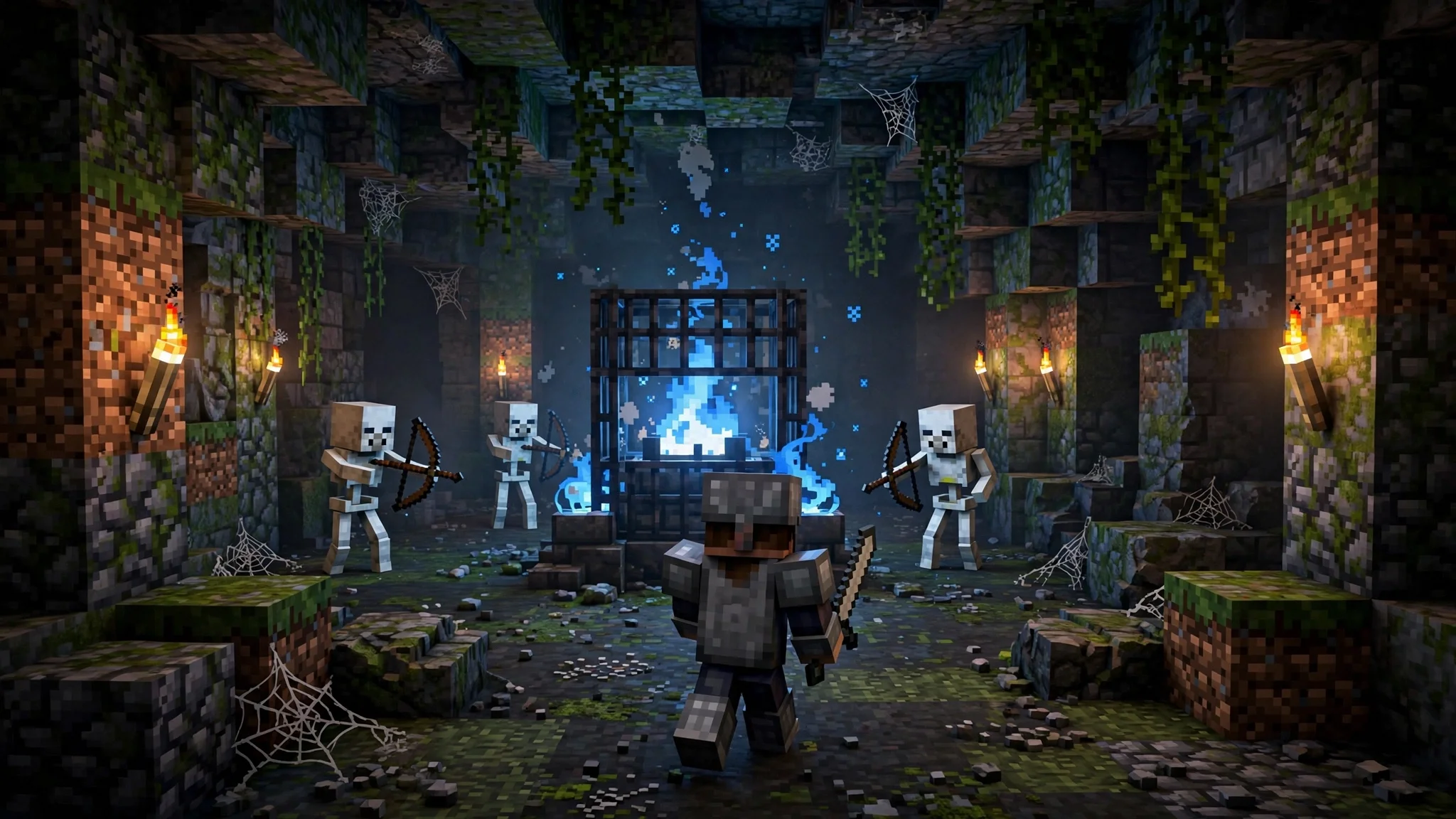
A skeleton farm is one of the most useful farms you can build in Minecraft. Bones turn into bone meal for your crops, arrows keep your bow stocked forever, and the XP from killing skeletons powers your enchanting table. Best of all, it runs on a skeleton spawner, so once it is built you can AFK nearby and collect drops without hunting mobs at night. This guide shows how to make a skeleton farm in Minecraft step by step, using only water, a drop chute and a few hoppers.
What You Need
Before you start, gather the building materials. You need water buckets, building blocks like cobblestone or stone bricks, torches, a few hoppers, chests, signs, slabs and a sword. A looting sword helps a lot, since Looting increases bone and arrow drops. Bring a pickaxe to clear the spawner room, and bring food and armor in case skeletons shoot at you while you work.
The most important ingredient is a skeleton spawner. Skeleton spawners generate in dungeons, small cobblestone rooms buried underground. You cannot move a spawner with Silk Touch or a piston, so you must build the farm around the spawner where you find it. Explore caves and listen for the rattling sound of skeletons, which is the best clue that a dungeon is nearby.
How to Make a Skeleton Farm in Minecraft Step by Step
Start by lighting up the area around the spawner and clearing the dungeon room. Skeletons spawn in a 9 by 3 by 9 area around the spawner, so clear a room about 9 blocks wide and 4 blocks tall with the spawner in the center. Make sure the floor is flat and the walls are solid, with no gaps where skeletons can escape or where light can leak in and stop spawning.
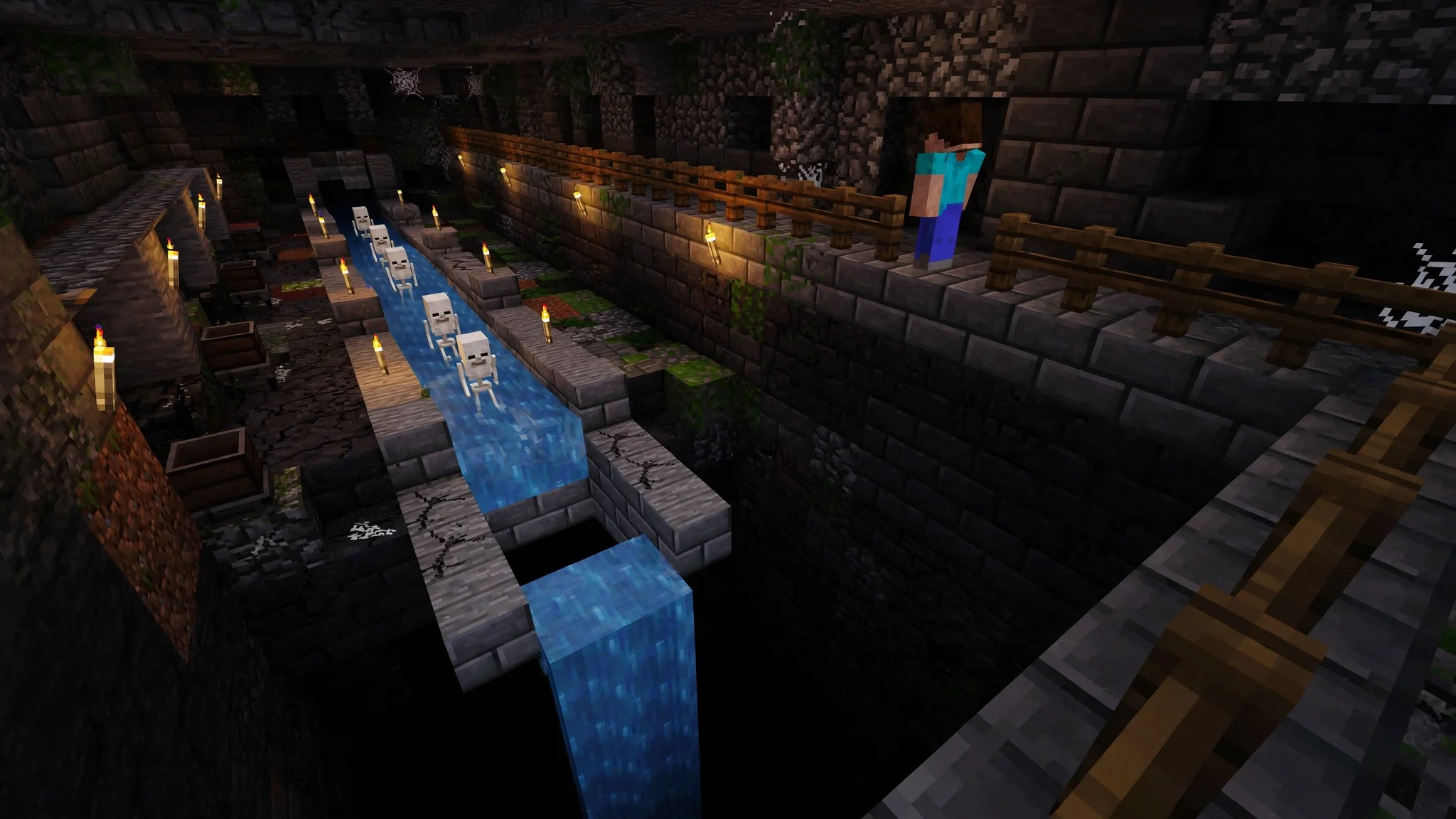
Next, dig a water channel. Place water sources at the far end of the room so the flow pushes skeletons toward a hole in the floor. The hole should be 2 blocks wide and lead down a drop chute about 22 blocks deep. A 22 block drop leaves skeletons with half a heart, so one punch kills them and you still get the XP.
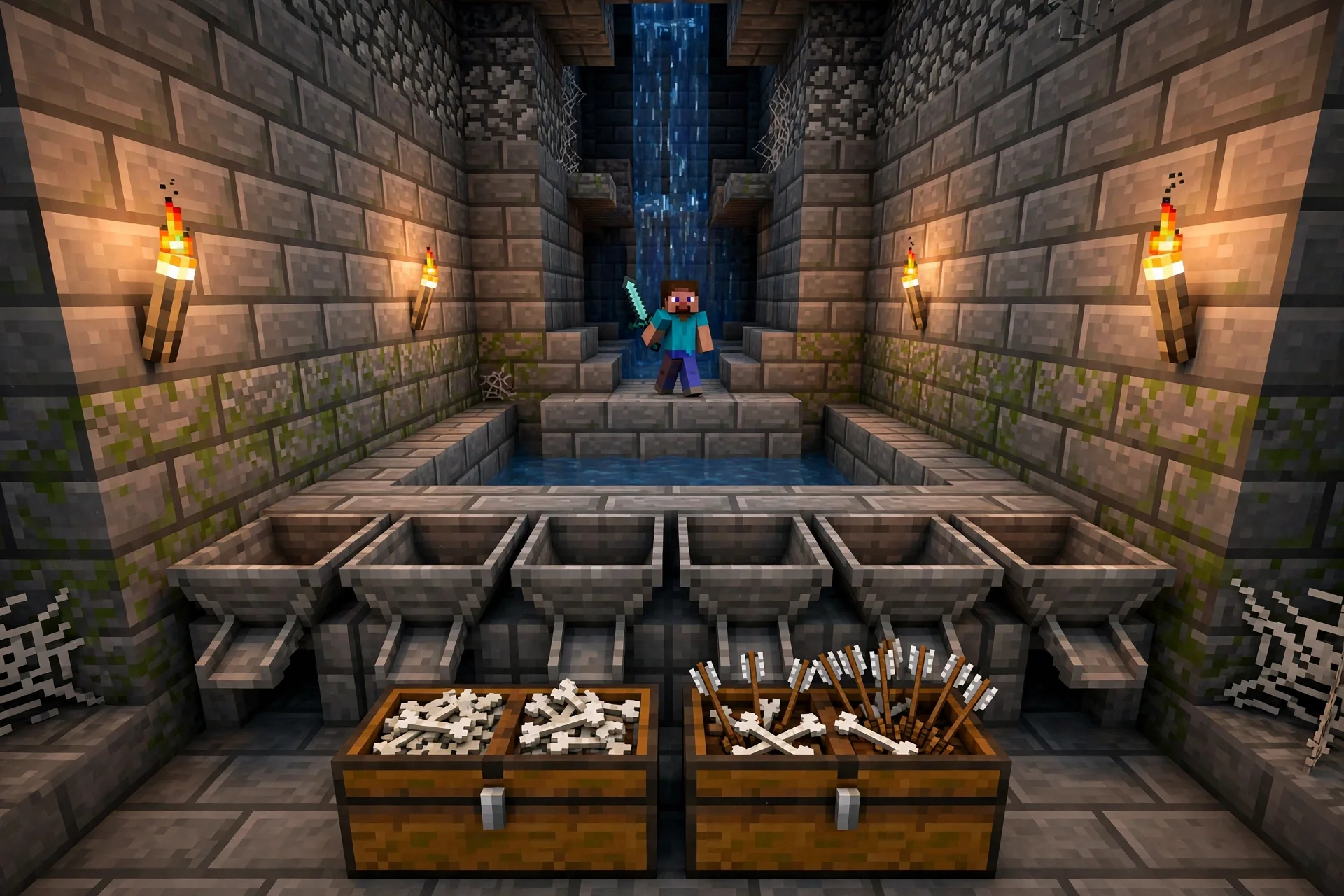
At the bottom of the chute, build a killing chamber with a half slab opening. You can reach through the slab to hit skeletons, but they cannot shoot you back. Place hoppers under the killing spot, feeding into chests, so bones and arrows are collected automatically. Add torches in the killing chamber and the collection room so nothing else spawns down there.
How Skeleton Spawners Work
A skeleton spawner activates when a player is within 16 blocks of it, and it spawns skeletons in the dark space around it. The spawner needs darkness, so the room must be light level 0. If any light leaks in, spawning slows down or stops. That is why the farm room must be sealed, with no holes in the walls or ceiling.
The spawner tries to spawn up to four skeletons at a time, as long as there are fewer than six skeletons nearby. It pauses for a short time between spawn attempts, so a well built farm produces a steady stream rather than a flood. Skeletons that spawn in the water channel get pushed along by the flow, fall down the chute, and wait at the bottom for you to finish them off.
Keep the AFK spot within 16 blocks of the spawner but far enough from the killing chamber that skeletons do not target you through the walls. A small room just outside the farm, with a bed and a chest for extra supplies, works well for long AFK sessions.
Building the Water Streams
Water is what makes this farm work. Place a water source block at each corner of the far wall so the flow covers the whole floor and pushes everything toward the center hole. The flow should be strong enough that skeletons cannot walk against it. Test it by dropping an item in the room and watching where it goes. If the item stops in a corner, add another water source or adjust the floor.
Use signs to stop the water from flowing down the chute. Place signs at the edge of the hole so the water stops there but skeletons still fall through. Without signs, the water would flow down the chute and slow the fall, which would leave skeletons with too much health. The signs keep the drop clean and fast.
For a larger farm, you can build two water channels meeting in the middle, or extend the room and add more water sources. The basic design scales well, and the same layout works for zombie spawners too, with a few small changes to the killing chamber.
The Collection Room and Killing Spot
The collection room is where the loot ends up, so build it with care. Place two hoppers under the killing spot, both feeding into a double chest. Add a second double chest nearby for overflow, and a crafting table and an anvil if you plan to stay a while. Bone meal is made by crafting bones, so keep a crafting table close.
The killing spot should have a half slab opening at head height. Stand behind the slab and punch skeletons through the gap. Their arrows cannot pass the slab, so you take no damage while you farm. If you have a Looting 3 sword, you will get far more bones and arrows per kill, and the farm pays for itself quickly.
Rates, Drops and XP
A single skeleton spawner farm produces roughly 100 to 200 bones per hour, plus a similar number of arrows, depending on your AFK time and how fast you kill. Each skeleton drops 0 to 2 bones and 0 to 2 arrows, plus a small chance of a bow or armor piece. With Looting 3, the drops increase and the occasional enchanted bow makes the farm even better.
XP is the other reward. Each skeleton gives 5 XP orbs, which adds up fast during a long session. A skeleton farm is not the fastest XP farm in the game, but it is one of the easiest to build, and it runs while you do other things nearby. Combine it with a crop farm and your bone meal will keep your wheat, carrots and potatoes growing nonstop.
Common Mistakes to Avoid
The most common mistake is leaving light in the spawn room. Even one torch or a gap in the ceiling can cut spawn rates in half. Seal the room completely and check for light leaks before you start your AFK session.
Another mistake is building the drop chute too short or too tall. Shorter than 22 blocks leaves skeletons with too much health, so you need several hits per kill. Taller than 24 blocks kills them on impact, which means no XP and no Looting bonus. Count the drop carefully before you dig.
Do not forget to light up the caves around the spawner. Other mobs spawning nearby can fill the mob cap and slow your farm down. Spend ten minutes placing torches in the surrounding caves and your farm will run much faster. Finally, never break the spawner by accident while clearing the room. If it breaks, the farm is gone, so keep a safe distance when mining.
FAQ
Can you move a skeleton spawner in Minecraft?
No, spawners cannot be moved, even with Silk Touch. You must build your farm around the spawner in the dungeon where you found it.
How far away do I need to stand for a skeleton spawner to work?
The spawner activates when you are within 16 blocks of it. Build your AFK spot about 10 to 12 blocks away, close enough to keep it active but far enough that skeletons cannot shoot you.
Do skeleton farms work in Bedrock and Java?
Yes, this design works in both Java and Bedrock editions. The water flow, drop height and spawner mechanics are the same in both versions.
What is the best use for all the bones from a skeleton farm?
Craft bones into bone meal and use it on crops, saplings and grass. Bone meal speeds up farming a lot, and extra bones can be traded or stored for later.
Final Words
Now you know how to make a skeleton farm in Minecraft, from finding a spawner to building the water streams, the drop chute and the collection room. It is a simple build with a big payoff: steady bones, endless arrows and free XP for as long as you AFK. Find a spawner on your next cave trip, build the farm around it, and your enchanting and farming will never be the same. Join the BD ZONE Discord to show off your farm design, and tell us in the comments how many bones your first hour produced.