How to Make a Nether Portal in Minecraft: Full Guide

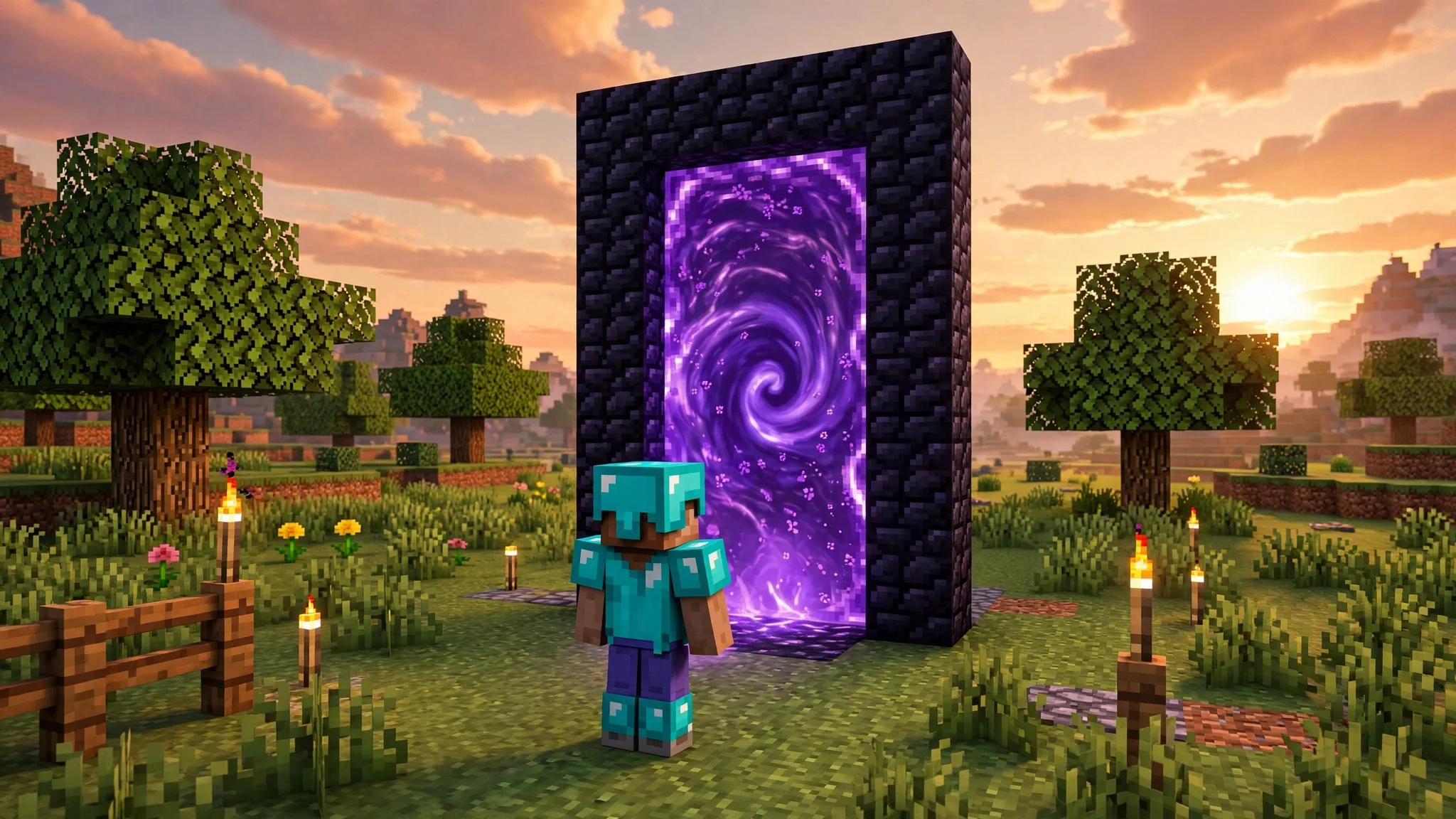
A Nether portal is the doorway between the Overworld and the Nether, and learning how to make a nether portal in minecraft is one of the first big steps in any survival world. Behind that purple doorway you will find blaze rods, quartz, glowstone, ancient debris, and the materials for potions and end-game gear. The good news is that the build itself is simple. You need ten obsidian blocks, a way to make fire, and a few minutes. This guide covers the exact frame, the smallest and largest sizes, how to light it, and what to do when things go wrong.
What You Need Before You Start
Before you build, gather these items:
- 10 obsidian blocks. This is the minimum for a working portal. Fourteen if you fill in the corners.
- Flint and steel. This is the easiest way to light the portal. A fire charge also works.
- A diamond or netherite pickaxe. Obsidian only drops as an item when mined with a diamond pickaxe or better. A weaker pickaxe breaks the block and gives you nothing, and mining by hand takes far too long.
- A water bucket (optional but useful). Pour water over a lava pool to turn it into obsidian right where you need it.
- Food, a few torches, and some spare blocks. You will want a safe spot on the other side, so bring enough to wall off your landing area.
If you do not have a diamond pickaxe yet, you can still make a portal by casting obsidian in place. Build a mold from dirt or stone in the shape of the frame, pour lava into it, then pour water over the lava. Each lava block turns into obsidian inside the mold. It is slower, but it works, and it is a handy trick for early survival worlds.
How to Make a Nether Portal in Minecraft Step by Step
Here is exactly how to make a nether portal in minecraft, one step at a time.
- Pick your spot. Choose flat ground near your base, close enough to reach easily but far enough from wooden builds that a stray ghast fireball will not matter later. Leave a few blocks of clear space around the frame.
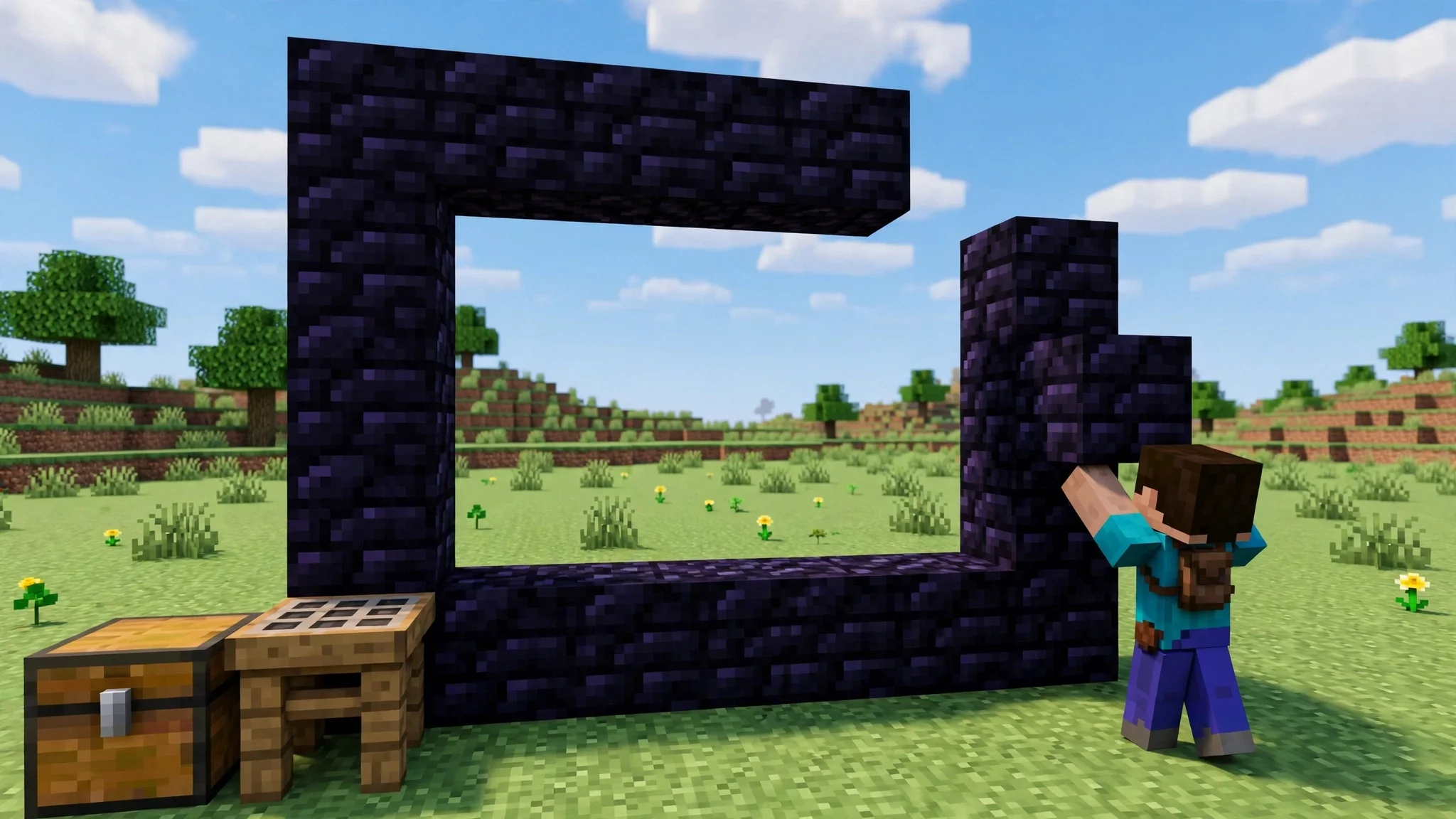
- Lay the bottom row. Place four obsidian blocks in a row on the ground. These are the bottom corners and the two bottom edge blocks.
- Build the sides. On each end of the bottom row, stack three obsidian blocks upward. You now have two pillars, each three blocks tall, standing on the corners.
- Close the top. Place four obsidian blocks across the top of the two pillars. The frame is now four blocks wide and five blocks tall, with a hollow opening two blocks wide and three blocks tall in the middle.
- Check the opening. Walk through the frame and make sure the inside is completely empty. Any block inside the opening will stop the portal from lighting.
- Light the portal. Stand in front of the frame, aim at the bottom inside edge, and use your flint and steel. The purple, swirling portal surface appears inside the frame.
- Step through. Walk into the purple surface and stand still for about four seconds. The screen swirls, and you arrive in the Nether.
The corners of the frame are optional. Leaving them out saves four obsidian and the portal works exactly the same way, which is why most players skip them.
Nether Portal Sizes: Smallest, Largest, and Best Size
Once you know how to make a nether portal in minecraft, the size question comes up fast. The rules are simple:
- Smallest portal: a frame 4 blocks wide and 5 blocks tall, with a 2 by 3 opening. This uses 10 obsidian without corners, or 14 with corners.
- Largest portal: a frame 23 blocks wide and 23 blocks tall. Anything bigger will not light.
- Best size for most players: the smallest size. It costs the least obsidian, lights just as fast, and takes you to exactly the same Nether. Build bigger only when you want a grand entrance for a base or a spawn area.
A bigger portal does not change where you arrive, how fast you travel, or what spawns nearby. It is purely a style choice, so spend your extra obsidian on armor and tools instead unless you are building a showpiece.
How to Light a Nether Portal
Knowing how to make a nether portal in minecraft is only half the job. You also need to light it, and flint and steel is the reliable choice for almost every player.
- Flint and steel: aim at any block inside the frame and use it. One click is all it takes.
- Fire charge: fire a fire charge at the inside of the frame, or place a dispenser with a fire charge next to it. Useful for hidden or automatic portals.
- Lava: place a lava bucket next to a flammable block, such as wood or leaves, inside the frame. When the block catches fire, the portal lights. This is slow and messy, so keep it as a backup plan.
- Ghast fireball: a ghast fireball that hits inside the frame can light a portal. Do not rely on this, since the same fireball can also break the portal if it hits the obsidian edge.
Always carry flint and steel when you travel through the Nether. If a ghast breaks your portal, you need a way to relight it, and being stuck on the wrong side without fire is one of the worst situations in survival Minecraft.
Linking Portals and the 8 to 1 Distance Rule
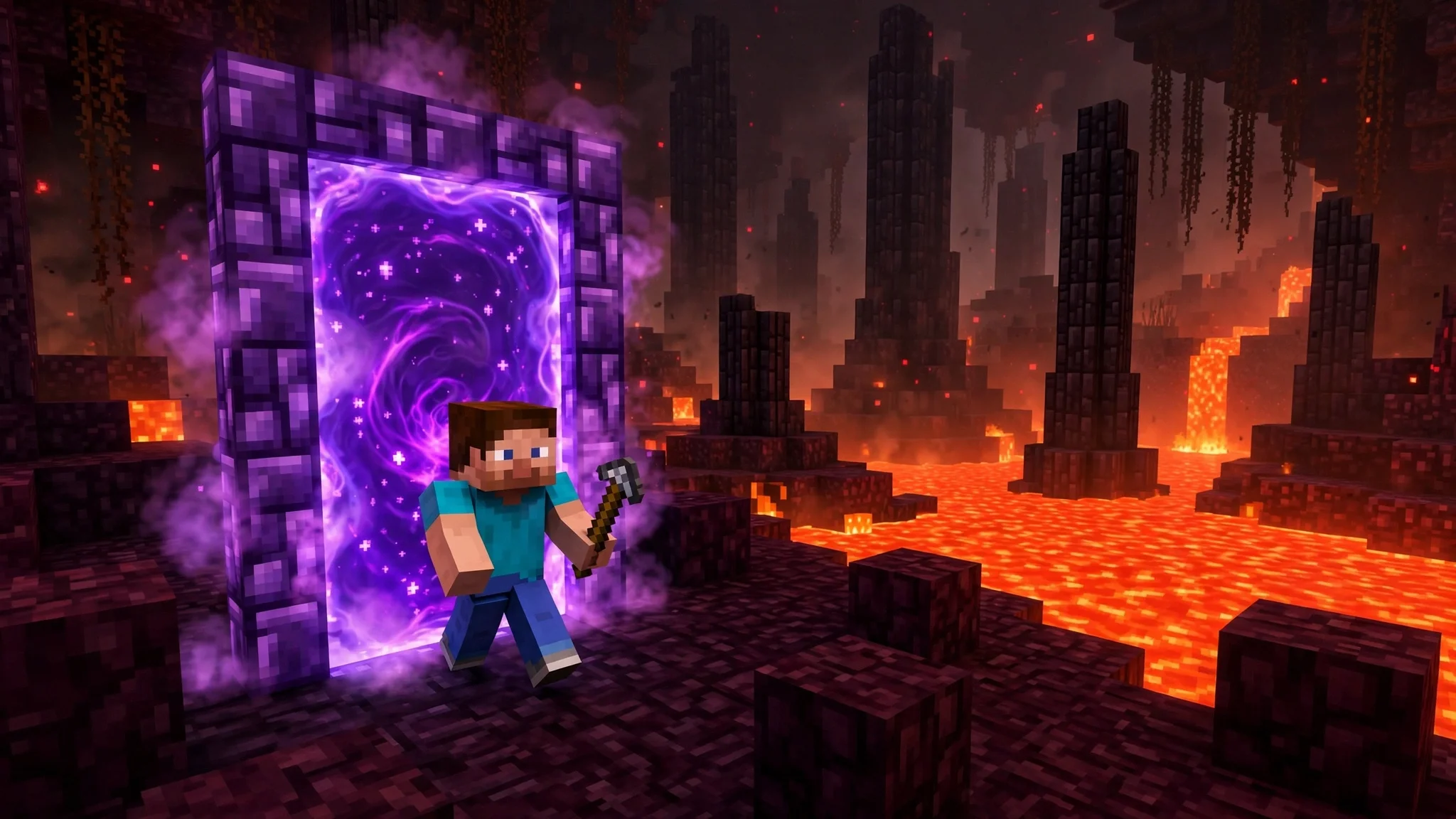
This is the part of how to make a nether portal in minecraft that trips up most players. The Nether and the Overworld do not share the same scale. One block in the Nether equals eight blocks in the Overworld. Walk 100 blocks in the Nether and you have traveled 800 blocks in the Overworld.
That rule is what makes portals a fast-travel system, but it also means a portal can drop you somewhere unexpected if you do not plan it:
- Match your coordinates. Take your Overworld X and Z coordinates and divide each by eight. Build your Nether-side portal at those coordinates, and your two portals will link to each other.
- Build a safe room on the Nether side. Wall off the area around your portal with cobblestone or another ghast-proof block, add a roof, and light it up. A portal that opens onto open lava or a cliff edge is a death trap.
- Keep portals apart. Two Overworld portals that are close together can link to the same Nether portal. Spread them out if you want each one to have its own exit.
- Wear gold armor. Piglins leave you alone while you wear at least one piece of gold armor, which makes building near your Nether portal much safer.
On the BD ZONE Survival server, this 8 to 1 rule is the key to fast travel. Link a portal at your base to a portal near a far-away build and you can cross the map in seconds instead of minutes.
Common Problems and Fixes
Even after you learn how to make a nether portal in minecraft, a few things can still go wrong. Here are the fixes for the most common ones:
- The portal will not light. Check the frame first. The opening must be a clean rectangle, at least two blocks wide and three blocks tall, with no blocks inside it. Extra obsidian touching the frame can also block the portal, so remove any stray blocks.
- You spawn in lava or inside a cave. The game places your Nether-side portal at the nearest open spot, which is not always safe. Build a new portal at the matching coordinates and break the old one, or wall off the lava around your landing spot.
- A ghast broke your portal. Relight it with flint and steel. If you are stuck without fire, look for a lava pool and use the lava and flammable block trick, or ask another player for help.
- You keep exiting at the wrong portal. Your portals are too close together and sharing one link. Move one of them further away or rebuild it at the exact matching coordinates.
- Piglins keep attacking you. Put on a piece of gold armor before you step through. Even a single gold helmet is enough to stop them from turning hostile.
Frequently Asked Questions
How many obsidian blocks do I need for a Nether portal?
Ten obsidian blocks is the minimum, with the corners left empty. Fill in all four corners and you need fourteen. Most players use ten and save the rest for an enchanting table.
Can I make a Nether portal without a diamond pickaxe?
Yes. The classic trick for how to make a nether portal in minecraft without mining obsidian is to cast it in place. Build a mold in the shape of the frame, pour lava into it, then pour water over the lava to turn it into obsidian. You still need flint and steel to light it.
What is the biggest Nether portal you can make?
The largest working frame is 23 blocks wide and 23 blocks tall. Anything bigger will not light, no matter how much obsidian you use.
Can you light a Nether portal with lava?
Yes, but it is awkward. Place a lava bucket next to a flammable block inside the frame and wait for the block to catch fire. Flint and steel is faster, cheaper, and far more reliable, so use lava only when you have no other option.
Do you have to fill in the corners of a Nether portal?
No. The four corner blocks are decoration. A portal with empty corners lights and works exactly the same as a portal with filled corners.
Start Your Nether Journey on BD ZONE
Now that you know how to make a nether portal in minecraft, grab your obsidian, light the frame, and step through. The Nether holds the blaze rods, quartz, and ancient debris your gear needs, and on the BD ZONE Survival server you can build your portal right next to your claimed base and link it to the community hub. Join us at PLAY.BDZONEMC.COM and share your first Nether base in our Discord at https://discord.gg/QzhjgYZNGs. What will you build on the other side?